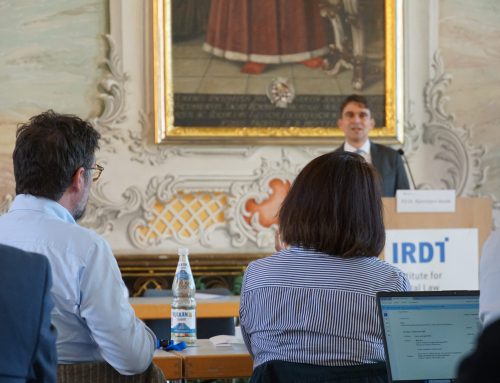
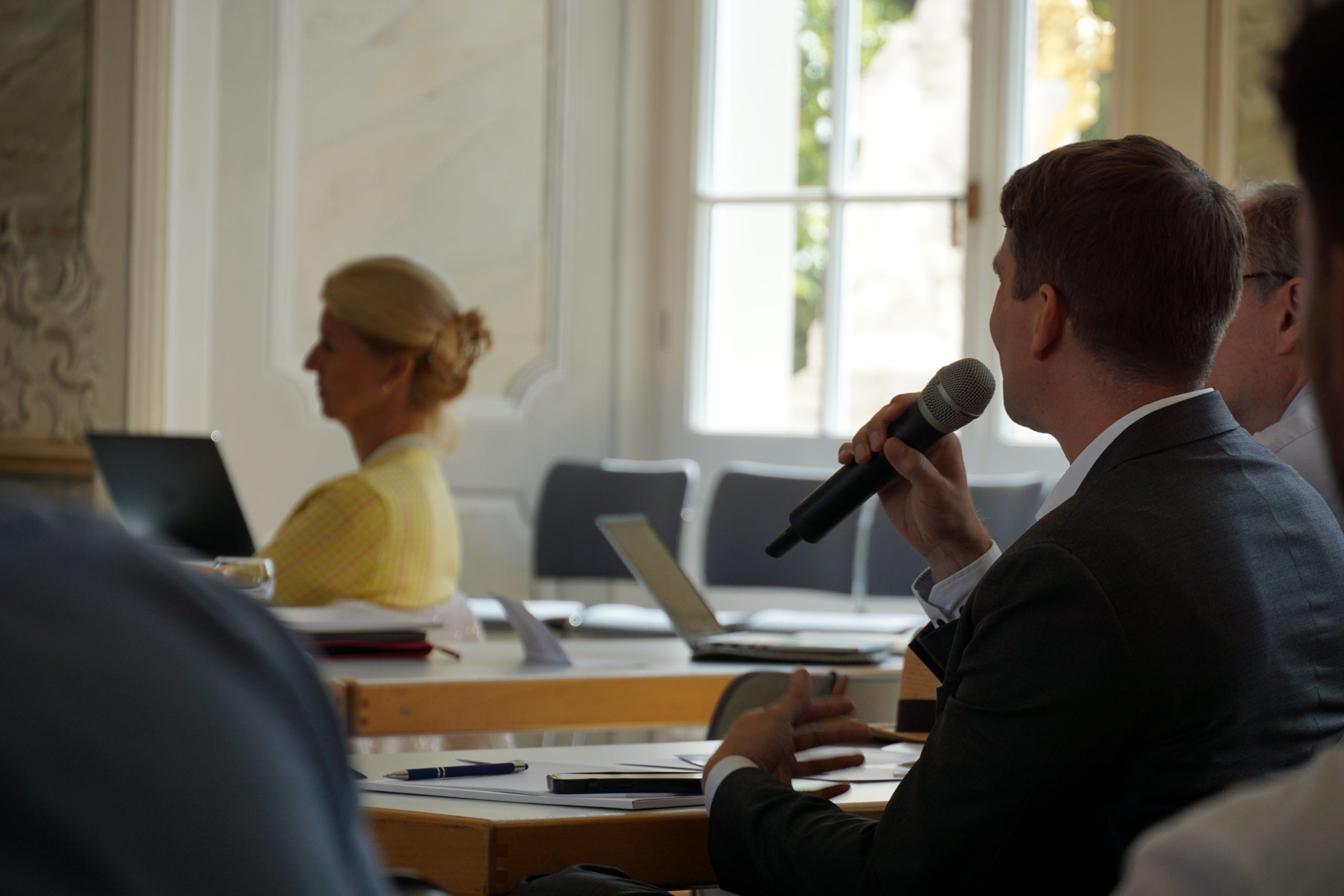
Panel I opened with PD Dr. habil. Jasmin Fitzpatrick and a political science perspective on our topic. She made the case for speaking of “harmful speech” rather than “hate speech” – what matters is the effect, not the motive – and traced along the principles of liberal democracy how harmful speech erodes representation and participation. Thank you so much for an opening that took the conference beyond the legal perspective from the very first minute!


Immediately following Fitzpatrick’s political science perspective, Katarina Barley, Vice-President of the European Parliament, shared her personal perspective. We would like to thank her for speaking openly about her own experiences of online abuse. She demonstrated how platforms turn spaces for exchange into spaces of isolation. And she made it clear that attacks on women are not only more frequent, but also different in nature. It was a talk that left a lasting impression.


On the afternoon of the first day, the focus turned to comparative law. Chaired by Prof. Dr Mark D. Cole (University of Luxembourg), four presentations demonstrated just how varied the responses to the same problem can be.
Prof. Dr Riku Neuvonen (Tampere University) contrasted the Nordic image of trust and closeness to the public with empirical evidence: in Sweden, over 90 per cent of MPs report experiencing online harassment. Particularly striking was his reference to the moderation gap in small language communities – there are only a handful of moderators available for Finnish-language content.
Prof. Dr Anna Demenko (Adam Mickiewicz University, Poznań) made it clear that what sets Poland apart lies less in its criminal law than in the climate of public discourse. Her thesis was a recurring theme throughout the conference: much of what appears to be speech online is not actually speech – troll factories and automatically generated content cannot be addressed through individual accountability.
Prof. Dr Camilla Crea (Università degli Studi del Sannio) contributed the perspective of private law and began with a paradox: those who must tolerate more criticism are simultaneously exposed to attacks of enormous reach. Drawing on leading Italian case law, she demonstrated how protection is shifting from reputation to dignity, image and identity – more criticism, but not fewer rights.
Prof. Dr Dr h.c. Andreas L. Paulus (University of Göttingen), a former judge at the Federal Constitutional Court, combined an academic perspective with a judicial one. His concluding remarks set the tone for the debate: the idea that speech regulates itself has not proved viable in the context of social media.
Many thanks to all four experts – and to Mark D. Cole for chairing the session!